
Sharp edges: an architect’s dream or a site manager’s nightmare?
Sharp edges are the hallmark of an uncompromising design language and are right at the top of architects’ wish lists when it comes to exposed concrete.
In practice, creating a sharp edge requires immense effort – the Exposed Concrete Technical Guide even states that ‘…unchamfered, sharp edges without minor chipping and bleeding’ – ‘cannot be produced technically or with certainty…’ Exposed Concrete Technical Guide, 2015 edition, page 17, section 5.1.2 Feasibility.
Sharp edges are not only difficult to produce, they also pose a risk of injury.
This is why the Implementation Instructions of June 2002 on Accident Prevention Regulations for Schools stipulate: “Corners and edges of walls and columns must not have sharp edges up to a height of 2.00 m from the top edge of the standing surface. Regarding Section 6(2): …in the case of concrete and masonry construction with chamfered or rounded edges;…”
So why not use the smallest, chamfered edge as a compromise?
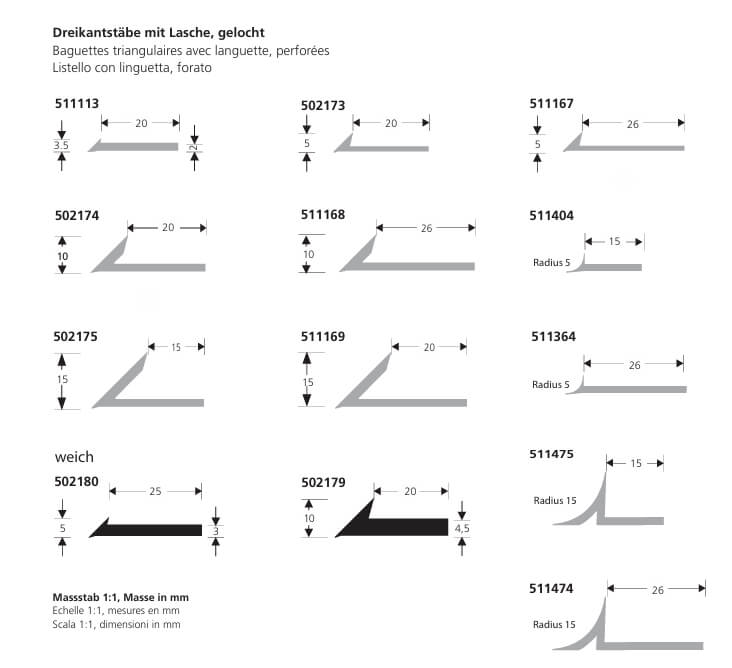
With a 3.5 mm chamfer, profilsager ag offers the smallest (to my knowledge) chamfered edge!
Until now, this dimension could only be achieved using a silicone joint, which, however, leads to colour differences and ‘smudges’.
In addition to this mini-chamfer, profilsager offers a wide range of variants that bridge the gap between aesthetics and manufacturability.
Also important: sealing the corner joint with high-quality formwork sealing tapes from MARO
The proof is in the pudding!
Are you interested? I’d be happy to send you samples, quotes or further documentation.